Namaste – Etymology, Meaning and Origins

Namaste is the word used as a common form of customary salutation in India, especially in Hindu religion both physical and spoken, when two individual meet. Namaste is a basic way of saying “Hello” but literally speaking … Read more

Bhagavad Gita Facts, Dates and Original Author

The Bhagavad Gita (श्रीमद्भगवद्गीता), means the Song of God is found as a 700 verses (solkas) text in the Bhishma Parva of the epic poem Mahabharata. Many historians claim that Gita was not part of original Mahabharata … Read more

Mantras, Science of Sound and Vibration

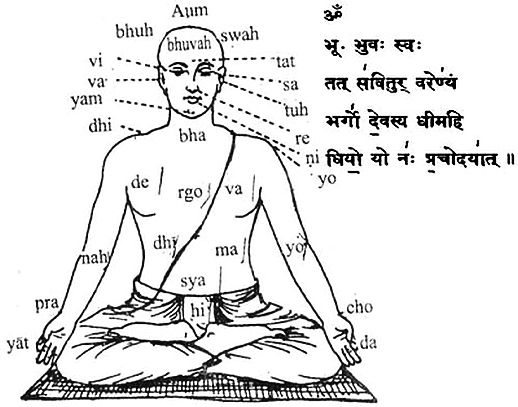
Mantra (मंत्र) means a self advise. ‘Mananat trayate iti mantrah‘ is how Mantra is defined in Sanskrit. It means that by repetition (mananat) of which, you overcome/protected (trayate) [overcoming or protection from bondage/troubles/cycles of birth and death] … Read more

Hexatoms and Photons in Bhagavata Purana

Modern scientists believe that the photon (light) is the transmitter particle (gauge boson) for electromagnetic force. Srimad Bhagavatam or Bhagavata Purana written around 3100 BCE, describes vedic atoms or hexatoms (made from combinations of 6 atoms), which … Read more